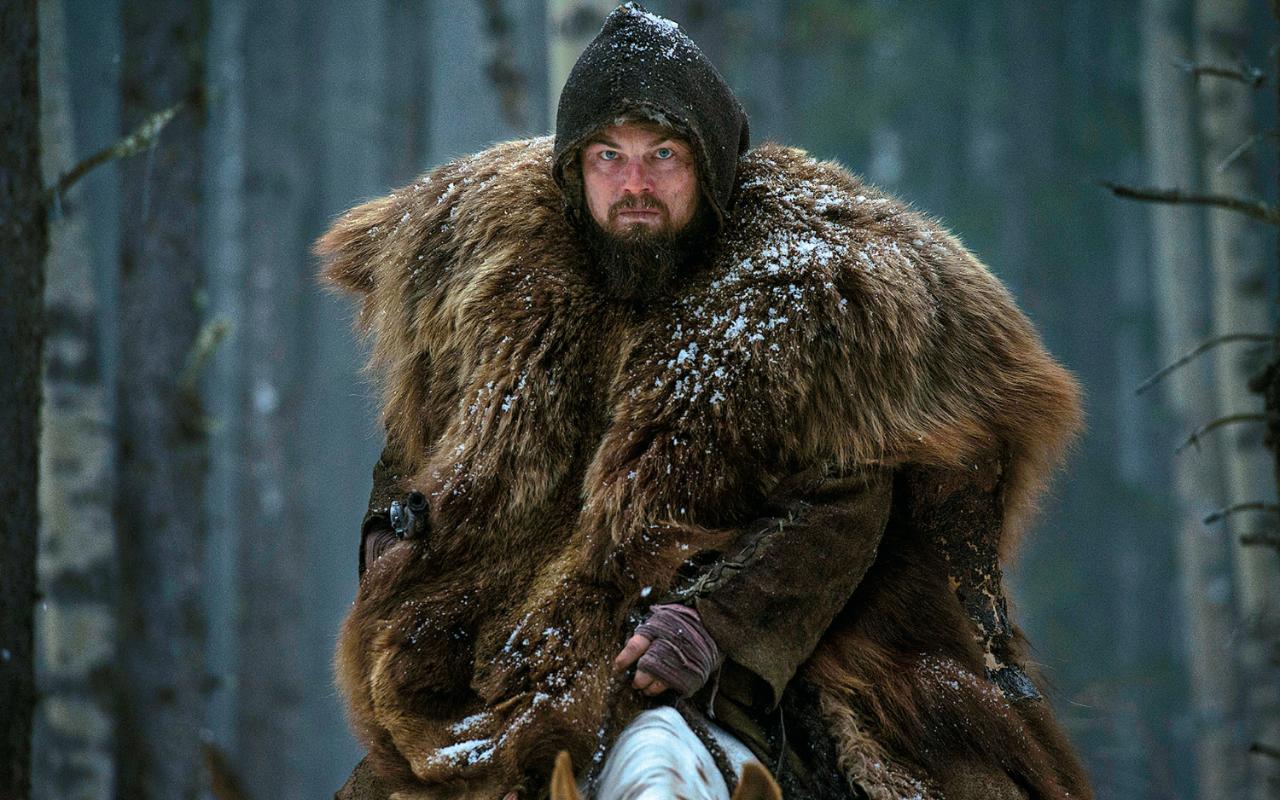
Bearskin...

Bearskin...

Friday, March 25, 2016

The Devil Loves Dirt

English 1301
25 March 2016

#DirtyWaysGetDevilsGate
Seven years at Hell’s gate for the unclean child changes his ways forever.
The Devil Loves Dirt
“Hell’s Gatekeeper” is quite a departure from the other Bearskin tales.  New criticism will be used for the review of this cautionary story of boy who did not want to get clean. He was very content to not wash. Those around him begged for him to get clean, but it was no use. He simply did not wish to be clean. He did not see the importance of being clean and so very stubbornly rejected all attempts at encouraging him to get clean.
One could take this story at the superficial level – a mother frustrated by a young child’s dislike of taking baths concocts a tale about the dangers of being dirty and warns that the Devil himself will come and snatch dirty children up and take them to Hell. Pretty scary stuff just to get a child to take a bath! However, there is a more meaningful purpose to this story.
The state of being dirty is repeated several times in this short story. In this case, dirt is representative of unrepentant sin. The story states that “when people are very dirty and go about unwashed the evil one gains power over them.” This implies that the Devil loves dirt because the dirtier a person becomes, the stronger the Devil gets. Since the boy had remained steadfast that he would not become clean, he just got dirtier and dirtier, while the Devil got stronger and stronger. One day, the boy disappeared. It is no coincidence that the boy disappeared for seven years. Seven years is significant because it is meant to call attention to the seven deadly sins. The boy was made to serve one year for each of the seven deadly sins. Seven is also a symbolic number in the Christian ideology and is considered a number of completion because it is the number of days it took God to create the universe according to the Bible.
            When the boy reappeared, he was a changed person He was haunted by his time as Hell’s Gatekeeper and shared with others what he learned. He told people of the agony of watching multitudes of people pass through the fiery gates to an eternity of damnation. He said that he felt tremendously lucky and deeply grateful that he was only condemned to be there for seven years. He was sure to tell this story to impressionable and innocent young children. He had learned the importance of being a role model who guided young people in the right direction. He knew that he must pass on the warning to the next generation that it was imperative to stay clean to keep the Devil away, which would render him powerless over them. He spoke of always wanting to be clean. Taking a bath is representative not only of being clean, but asking for forgiveness and therefore gaining a clean slate in one’s life. He expressed that he had repented and just as if he had taken a bath, had become clean and was resolved that “he did not want to become Hell's gatekeeper once again.” He discovered his role in life to never return as a gatekeeper and to spread the word of his experiences to keep others from the same fate.
Elements of new criticism are found throughout this version of Bearskin. The title is tied to the story because the boy ends up serving as “Hell’s Gatekeeper”. Dirt is a recurring motif and cleanliness is symbolic of redemption. The literary term bildungsroman applies to this story, as it follows the boy’s journey from refusing to be clean to lamenting that choice and learning from his mistake, to warning others not to make the same bad choice he had made, to finally revealing that he is a changed person.
Works Cited


Ashliman, D.L. “Bearskin and other folktales of type 361.” Univeristy of Pittsburgh, 24 October 2013. Web. 15 Feb 2016.

Sunday, March 6, 2016

Psychoanalysis of The Devil as Partner

English 1301-175
            6 March 2016
#PartnerIDidBetterThanYou
A better tomorrow bought with devil’s dollar ends with the devil winning.
Psychoanalysis of "The Devil as Partner"
“The Devil as Partner” is another version of the story titled “Bearskin.” This version originates from Switzerland. In the story, a traveling journeyman does not have enough money to pay for his stay at an inn. One night the devil appears before the journeyman and offers him a deal: the devil would give him “money like leaves on a tree” in exchange for the journeyman neglecting his personal care (Ashliman). In other words, the journeyman could not wash himself, comb his hair, cut his hair, or cut his nails during the time that he stays at the inn. Through application of psychoanalytic criticism the motivations of the author and characters are discovered. We can find answers to the questions about the characters’ actions. Why does the devil offer the journeyman the deal? Why does the journeyman accept? Why is the story told and why does the audience listen?
By applying a psychoanalytic approach to the story it can be inferred that the journeyman was in a state of desperation. This desperation is what causes him to strike a deal with the devil. This is something that the journeyman would not normally do. This can be concluded after carefully reading the beginning of the story. The journeyman knew before staying at the inn that he did not have enough money to afford his stay. Yet, he stays anyway, because he is extremely tired from traveling so long without a respite. After a time, the innkeeper asks the journeyman for payment.  The journeyman feels remorse and a heavy weight for staying at the inn knowing full well that he does not have the money to pay the bill. He stays awake all night, which is a clear sign of remorse, guilt, and sheer stress. Just as desperation drove him to stay at the inn knowing he did not have money, it also drives him to make the deal with the devil.  He saw no other way out of his predicament. . During his tenure at the inn the journeyman’s life becomes stagnant. There is no moving forward for him. This can be likened to a childish fantasy of life in which we do not have any responsibilities and all our wants and needs are taken care of. The journeyman eventually longs for more out of life than his current dream-like existence as evidenced by his staring at the house of the merchant with three beautiful daughters. When the merchant comes to him looking for assistance the journeyman seizes the opportunity to marry. This is his way forward and represents growth beyond the stagnation.
            The psychoanalytic criticism can also be applied to the oldest two daughters of the merchant. When confronted about marrying the journeyman, the oldest two daughters reject the journeyman and run away. “What sort of a creature is this that you've brought home? I'd sooner hang myself than to marry him” is the repulsive reply one of the daughters gives (Ashliman). They essentially judge the journeyman by his appearance alone. The third daughter, however, agrees to marry the journeyman, for she claims that something good must lie within the journeyman. She is able to see a little beyond his looks. However, it is apparent that she does not relish the thought of marrying the journeyman. She is somewhat acquiescing to her father’s wishes. But, by choosing to marry she is also choosing to move forward with her life. Her decision is the counterpoint to the journeyman’s own decision. In the end, the journeyman becomes a nobleman. Upon seeing the transformed man the two older sisters regret their initial decision.  . They saw only ugliness in the journeyman, which reflects a negative and shallow view of the world.   To them if something is not immediately visible, then it must not be beautiful. The third daughter, however, saw the good in the journeyman beneath his unkempt exterior. This reflects her worldview. She sees the inner beauty, indicative of a more positive and open-minded view of the world. The older sisters are consumed by such a large amount of bitterness and envy that they commit suicide. They may have chosen to end their lives to escape having to face their fears about the shame they felt for having rejected a fine man and having their younger sister marry before them.
            Psychoanalysis reveals the hubris of the man willing to make a deal with the devil and believe he will come out ahead. The journeyman completes his seven years of unclean living and the devil gives him all that was promised. But, at no time did the man suspect that someone else would have to pay for the bargain he made. Thinking he had bested the devil was a mistake because the devil truly won. The devil got two of the sisters while the journeyman only got one.

Works Cited
Ashliman, D.L. “Bearskin and other folktales of type 361.”University of Pittsburg, 24 October
2013. Web. 15 Feb 2016. 

Friday, February 19, 2016

New Historicism and Jacob and Wilhelm Grimm’s “Bearskin”


Ben Steinhauser, Alicia Mahoney, Jose Garcia, Maria Carrillo

Professor Kazia L. Estrada

English 1301-175

19 February 2016


#Devil2Bearskin1

In devil dealing, two souls are lost despite a desperate soldier’s struggle. 


        “Bearskin” is the story of a man that makes a deal with the devil due to his desperate circumstances. New Historicism will be applied to the version by the Grimm brothers, Jacob and Wilhelm. New Historicism considers the historical context of the story and that of the author(s).

        In this version of Bearskin, the soldier is a volunteer as the story states that he “enlisted.” He is described as being brave, so he embodies the best of qualities to have in a soldier. During a time of war, a soldier is important, but when there is no war a soldier is useless and a burden on society. This is because the soldier only knows how to fight. The story states that his parents are dead. This may have been added to the story by the authors because their father died when they were young. They were therefore forced to provide for their family. The soldier then asks his brothers for help, but they refuse their brother’s request. The brothers are described as “hardhearted.” This would not have been considered the Christian thing to do. The Grimms had a strict Lutheran upbringing and maintained a lifelong religious faith. If this had been an über-capitalistic society then the brothers’ actions would have been deemed right.

        In his desolation, the soldier wanders a wasteland until he comes upon a circle of trees. The circle of trees represents protection and shelter. He takes refuge under the trees, and in his despair, comes to accept his fate - death. It is at this point the Devil makes his appearance. The Christian audience knows this to be the Devil because of his “hideous horse’s foot.” The Devil is known by Christians to be evil, but powerful. The Devil asks the soldier if he would be interested in making a deal, to which the soldier responds “[I]f it does not endanger my salvation.” Salvation would refer to the Christian belief of Heaven and reflects the soldier’s faith. The soldier does not wish to ruin his chance at eternal life by making the deal. This shows the focus of the authors on Christian living. The soldier says that he does not wish to endanger his salvation, but in desperation he makes the deal anyway. The original audience would find the illicit deal made by the soldier with the Devil very compelling. It would have ensnared them in the story. The Devil’s deal requires the soldier to ignore his hygiene. He is also forbidden to say the Lord’s prayer. Therefore, it must be assumed that this is also a sacrifice. The Devil gives his green jacket to the soldier. By this gift along with the bearskin, the soldier is transformed into Bearskin. The green color of the jacket represents rebirth and progress. However, it also symbolizes envy and greed.

        Bearskin, with his newfound power – money, gives generously to the poor. He does this so they will pray that he not die. The people of the story are prejudiced towards persons due to their looks and/or smell. But Bearskin’s money acts almost as an equalizer. They are able to tolerate him because of it. In direct juxtaposition to how his brothers treated him, Bearskin pays an old man’s debts and gives him a bagful of money without expecting anything in return. As opposed to his brothers’ hardheartedness, Bearskin is described as having a “compassionate heart.” This also fits with the Christian notion of charity, one of the Seven Heavenly Virtues.

        The old man in return for Bearskin’s generosity offers him the hand of one of his beautiful daughters. When they meet the daughters one of them speaks of a shaved bear that “was wearing a hussar’s fur.” A hussar would have been a cavalryman of the time period and region of the authors. The youngest daughter accepts the marriage out of obligation to her father. Women of the authors’ time had little power. The men in their lives had almost total control over them, first their fathers and brothers and then their husbands. Hereafter, the daughter dresses in black, a symbolic color of mourning, as she believed that her life is over and she will have no future happiness.

        Bearskin, meanwhile, continued to travel and do good deeds. He remained generous and his Christian charity is noted. After seven years, his journey was complete, Bearskin returned to the circle of trees; he had come full circle. A circle can represent an embryo. Bearskin is to be reborn. The devil cleaned him up. Where before he looked like a brave soldier, the man now is “much better looking than he had ever been before.” This implies that he is no longer just a former soldier. He is now a better man.

        The hero of the story buys new clothes and a carriage pulled by white horses. The color white represents cleanliness and purity. For the first time in years the man is clean. When this occurs, one is reminded of the proverb “cleanliness is next to godliness.” White horses represent warrior heroes and triumph over evil. In the Book of Revelation, Christ rides atop a white horse at the head of an army come to pass judgment on the world. The man is about to do the same thing in the story.

        When he comes to the house of the old man the two oldest daughters now serve him where before they ran from him and rejected him. This reemphasizes how important looks were to the people and serves as a warning to the pitfalls of vanity. He reveals himself to the youngest daughter with the words: “I am your betrothed bridegroom, whom you saw as Bearskin. Through God's grace I have regained my human form and have become clean again.” He says this but it was not God that transformed him, it was the Devil. The other two daughters after hearing this commit suicide. They probably did this because, as females, their sole purpose in life was to serve. They first served their father, and as they grew older they were required to get married and have children. They had very few choices. So when they failed to obtain the rich, handsome husband, who had originally been offered to them, they ended their own lives. They also probably feared the constant reminder of their failures if they had continued living as spinsters when invariably they would be compared to their younger sister. In the American society of today, rejecting someone based on appearances alone is usually considered wrong. However this is far less wrong than having to marry someone because of some obligation or perceived duty.

        The Grimm brothers may have had a special connection with this story because of their own struggles with money and class. As children they were well off and had private tutors and servants. But that abruptly ended with the death of their father. Subsequently, they struggled to support their family for a large part of their lives. They also struggled with class power. They were denied admission to school because of their class. Once accepted to a school they had to pay their own way, while students from higher social classes received stipends. Christian elements are seen throughout the Bearskin story. Religious faith was important to the Grimm brothers and their audience. To better understand the story knowledge of Christianity is required.


Works Cited
Ashliman, D.L. “Bearskin and other folktales of type 361.” Univeristy of Pittsburgh, 24 October                  2013. Web. 15 Feb 2016.

Thursday, February 4, 2016

A Marxist View of Hans Jakob Christoph von Grimmelshausen’s Bearskin


#BetterDaysBearskin
 The promise of wealth leads to devilish circumstances

            Bearskin tells the story of a man that makes a deal with the devil in order to achieve wealth. The characters often find themselves in situations dependent on the accumulation of wealth or status over humility. As with Marxism, we see how economic status changes how the characters value each other and themselves and affects their actions. We will look at this version of Bearskin and explore its Marxist viewpoints.
In this version of Bearskin, by Hans Jakob Christoph von Grimmelshausen, a soldier in dire circumstances accepts an offer from a spirit in order to save his own life and gain great wealth. The offer stated that for seven years the soldier was to wear only a bearskin robe and “was not to wash, nor cut his nails, nor blow his nose, nor even wipe his behind” (Ashliman). In return, the spirit would provide him with food, drink, and endless supply of money. They agreed to the terms and found that despite his rancid appearance the money he had was often enough motivation for people to provide him service or shelter. One day, a nobleman saw the soldier, Bearskin, at an inn and was impressed by his wealth and made a proposal to him. The nobleman told him he could marry one of his three daughters and took the soldier to meet them. Upon seeing the Bearskin and his terrible appearance, two of the girls paid him no attention. The youngest daughter, however, accepted her father’s will and agreed to marry Bearskin. To formalize the agreement Bearskin took a gold ring, twisted it into two pieces, and gave her one piece and departed saying he would return. At the completion of the seven years, Bearskin returned cleaned up, well dressed, and in a fancy carriage to claim his bride. Upon seeing the now handsome Bearksin, the two sisters who refused him before were so envious and mad that they had lost their chance that they killed themselves. The devil then earned two souls for the price of one.   
            In Marxism, there is the belief that social and economic conditions influence how and what people value. In the story, Bearskin accepts a seven-year commitment to live in filth and disgust in order to achieve a great amount of wealth. The man was probably of the lower class and thus forced into the military due to his social and economic status. He found himself in a war that he did not want to fight and thus deserted. The devil then took advantage of the man’s situation by offering him wealth when he was suffering the most. The man in desperation and seeing the opportunity to improve his socioeconomic status accepts the offer. After he accepts, we see the impact the money has on those around him. “He took lodgings in a village inn, and discovered soon enough that his great wealth was ample compensation for his strange looks and ill smell” (Ashliman). Despite how grotesque his appearance and smell was the economics of the situation always kept people willing to serve him. Even the nobleman who offers his daughter for marriage was “impressed by Bearskin's lavish and generous expenditures” (Ashliman). The nobleman did not consider if Bearskin was a good man, but only that he was wealthy. The only prerequisite for the nobleman’s daughter was a sum of money that would appease him. In the end, even the deal the devil made was an investment of sorts. He acquired two souls by investing just one. 
            All through the story, we continuously see the characters acting for their economic benefit. Bearskin makes a deal to increase his wealth and status and come out on top. On the other hand, the sisters that judged him for outward appearance lost their lives for assuming he came from a lower class. A Marxist viewpoint is continually applicable throughout this version of Bearskin and its emphasis of wealth and its power to affect people’s choices. 
Works Cited

Ashliman, D.L. “Bearskin and other folktales of type 361.” Univeristy of Pittsburgh, 24 October 2013. Web. 03 Feb 2016.